
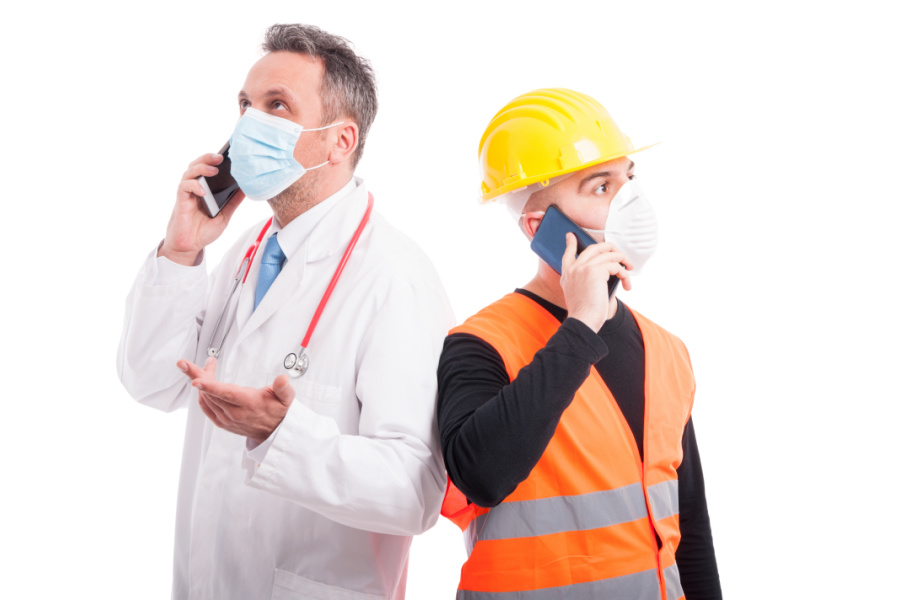
Occupational health (OH) is the field of medicine focused on workplace health and wellbeing. Its purpose is to protect employees, prevent work-related illness or injury, and promote overall wellbeing, while also ensuring that work environments are safe and suitable for all staff.
At its core, occupational health asks two key questions:
If the answer to either question is “no,” occupational health helps determine:
Beyond individual employees, OH also looks at the broader workforce, identifying early health-related trends and advising on preventative measures that organisations can implement to improve workplace wellbeing and safety.
By taking this proactive, medical approach, occupational health supports both employee health and business performance.

For occupational health (OH) to be successful, three critical components must be in place: impartiality, confidentiality, and specialist knowledge.
OH provides independent medical advice to both employers and employees, whether the service is in-house or externally contracted.
This impartiality is essential to build trust and ensure effective outcomes—particularly in situations where there may be tension or suspicion between staff, their representatives, and management.
Confidentiality is a cornerstone of occupational health practice. OH professionals are bound by strict rules set by their governing bodies, similar to the standards applied to general medical records such as GP notes.
Key points include:
This protection ensures employees can trust OH services and share accurate health information.
Effective OH requires more than general medical training. Professionals rely on specialist expertise and organisational knowledge to provide tailored advice.
Key areas of expertise include:
A proactive, “can-do” approach ensures recommendations support both the employee’s recovery and ongoing productivity, while maintaining a safe and effective workplace.
It’s important to understand the limits of occupational health (OH):
Understanding what OH is—and what it isn’t—helps organisations use it effectively while maintaining trust and professional boundaries.

The composition of an occupational health (OH) team is flexible and depends on the size of the organisation and its specific needs. There is no single “ideal” team structure, but most employees and employers will primarily interact with:
The wider OH team may also include:
By combining these roles, an OH team can provide comprehensive support for both employees and employers, tailored to the organisation’s requirements.
Occupational health (OH) plays a vital role in supporting both employees and organisations. One of its main tasks is advising on workplace adjustments to help employees remain at work or return safely after illness or injury, including guidance on whether such adjustments are likely to be temporary or permanent. OH also provides guidance on organisational policies, such as absence management, ensuring they are applied fairly and consistently.
OH professionals help businesses comply with legislation, including the Equality Act 2010 and health and safety regulations at local and global levels. They collect and analyse workplace health data, conduct audits, and identify trends in work-related health issues. They provide expert advice on ergonomics and workplace design, particularly for new projects, and carry out statutory health surveillance as required by law.
Specific fitness assessments are another important function, particularly for safety-critical roles such as working with breathing apparatus, handling food safely, or performing work at height. OH also delivers training programmes, including mental health awareness and occupational health measures like skincare to prevent dermatitis.
Occupational health works closely with other professionals, including safety teams, managers, HR, physiotherapists, and medical specialists such as GPs. This collaboration supports activities like risk assessments, travel risk evaluations, workplace and site visits, and participation in health and safety committees.
OH also manages employee health assessments, including support for those experiencing absence, disability, or other health-related challenges. They advise on graded returns to work, redeployment, or ill-health retirement where necessary. Additionally, OH can provide immunisations, such as hepatitis B for healthcare staff or flu vaccinations for critical roles in other industries.
By combining these services, occupational health ensures employees are supported while helping organisations maintain safe, productive, and legally compliant workplaces.